2025 in review for private investors: the dollar mattered most
For a euro investor the dollar's 12% fall outweighed the April tariff crash. The S&P 500 gained about 16% in dollars and about 2% in euros.
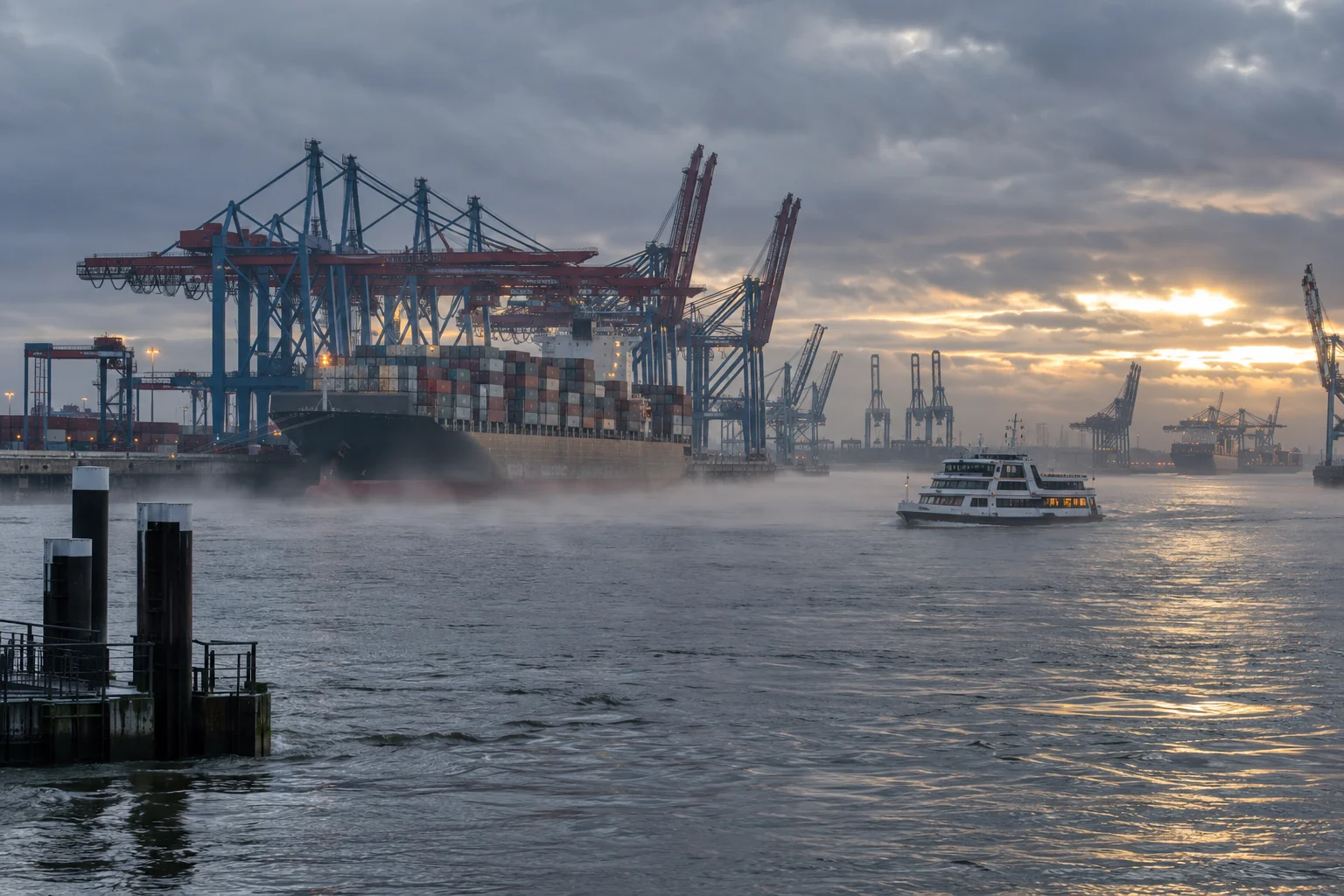
The event of 2025 that cost a euro investor the most was not the tariff crash in April. It was the dollar. The ECB's reference rate stood at 1.0321 dollars per euro on 2 January and at 1.1753 on 15 December, which means every dollar asset lost about 12 per cent of its value in euros before its own performance is counted. The S&P 500 was up roughly 16 per cent in dollars by mid-December and about 2 per cent in euros. The DAX gained about 21 per cent.
That is the short version of the year. The longer one has five parts, and they did not reach the liquid and the illiquid half of a portfolio at the same speed.
April: the crash that rewarded doing nothing
On 2 April the US president announced tariffs on imports from nearly every country: 10 per cent as a baseline, 20 per cent for the European Union. Share prices fell worldwide for a week. The DAX, which had closed 2024 at 19,909 points, touched an intraday low of 18,490. On 9 April most of the country-specific rates were suspended for 90 days and markets turned.
By mid-December the DAX stood above 24,000, after a record in October. An investor who sold in the second week of April to "wait for clarity" had to buy back higher or stay out of a year that added a fifth. Clarity came in stages: a political agreement between the EU and the United States on 27 July, and a joint statement on 21 August that set a ceiling of 15 per cent for most EU goods. None of those dates was a better entry point than the day of the panic.
For the illiquid part, April was something else. Private fund valuations are set quarterly and reported weeks later, so for a few days the private share of a mixed portfolio rose simply because the public share had fallen. We described this at the time in the tariff shock and the denominator effect. The effect had reversed before a single quarterly report could show it. Whoever cut new commitments in April because of it reacted to an artefact.
The dollar: the loss nobody booked
The euro rose from 1.03 dollars in January to above 1.18 in mid-September, the highest ECB reference rate of the year, and has stayed near 1.17 since. For a euro investor this was the larger event, and it arrived without a headline.
Take a fund stake with a NAV of USD 200,000 that did not change all year. In euros it was worth about EUR 193,800 on 2 January and EUR 170,200 on 15 December, a loss of EUR 23,600 that appears in no fund report, because the report is in dollars. The same holds for US shares in a depot, for a dollar ETF and for a convertible loan to a Delaware company.
The currency also worked in the other direction. An unfunded commitment of USD 100,000 would have cost EUR 96,900 to pay in January and EUR 85,100 in December. An LP who is still early in a dollar fund has seen future calls get cheaper while the existing stake lost value. Both effects are real and only the first tends to be noticed. We went through the mechanics after the first half of the year; the second half added little to the move and took nothing back.
Germany: a fiscal turn and a strong index
The DAX's year had a domestic reason as well. On 18 March the Bundestag, and on 21 March the Bundesrat, amended the constitution: defence spending above 1 per cent of GDP was exempted from the debt brake, and a special fund of EUR 500 billion for infrastructure was created, to run for twelve years. Defence shares in particular rose on the expectation of orders.
The other consequence showed up in the bond market. More federal borrowing means more Bunds, and long-term yields did not fall with the ECB's rate.
Rates: short end down, long end not
The ECB cut its deposit rate four times in the first half, most recently on 5 June to 2.00 per cent, and has left it there since. The US Federal Reserve cut three times in the autumn, on 10 December to a range of 3.50 to 3.75 per cent.
Anyone who expected mortgage rates to follow was disappointed. Interhyp put ten-year loans at around 3.6 per cent in early November, with ten-year Bund yields between 2.4 and 2.7 per cent for months, and most of its bank panel expecting rates nearer 4 per cent in 2026. For owners whose fixed-rate period ends soon, cheaper money from the ECB changed nothing in the sums, which we worked through in the refinancing plan for a rental flat. At the short end the cut does arrive: with the deposit rate a full point below its level at the start of the year, overnight money pays less. Cash held for capital calls earns less, and the cost of holding too much of it has risen.
Gold: the best-performing asset, also in euros
Gold traded above USD 4,000 an ounce for the first time in October and was fixed at about USD 4,340 on 12 December, roughly 63 per cent above the start of the year. In euros the gain was more than 40 per cent, because the weak dollar took its share here too. We looked at the reasons and at gold's place next to illiquid holdings in September. The year-end observation is narrower: gold was the one large asset that gained through the tariff shock, the dollar decline and the rate cuts alike. That is a statement about 2025 and not a forecast.
Exits: a window, not yet a flow
The private half of a portfolio waited through most of this for cash. The year did bring listings again. Klarna, the Swedish payments company, went public in New York on 10 September at USD 40 a share and raised USD 1.37 billion, at a valuation of about USD 15 billion; in 2021 it had been valued at USD 45.6 billion. That one transaction says two things: the window is open, and it opens at prices below the marks of four years ago.
For an LP the test is whether listings turn into distributions. An IPO is followed by lock-ups and staged sales, so cash from a September listing reaches investors in 2026 at the earliest. DPI remained the number to watch, as it was in the summer.
The last weeks added a reminder about concentration. Shares of Oracle and Broadcom fell sharply in the week of 8 December after their quarterly reports, and the doubt about what AI infrastructure will earn spread to other names. An investor with a US-heavy index fund, two venture funds and a few angel holdings owns the same theme three times.
What the year showed about one overview
Every one of these events landed in a different place. The tariff crash showed in the depot within hours and in fund reports not at all. The dollar hit the depot daily and the fund stakes silently. Rates reached the deposit account in weeks and the property loan only on the day its fixed-rate period ends. The Klarna listing sits in a quarterly report as an unrealised gain and will reach the bank account later, in parts.
Someone who looked at each account separately saw a strong year in the German depot, a flat one in the world ETF, unchanged funds and a property that did what it always does. Someone who put it together in euros, at current exchange rates, with unfunded commitments next to the cash meant to pay them, saw something else: a portfolio whose dollar share had shrunk without a single sale and whose private share had grown without a single purchase.
That consolidated view is what we have been building Valued for since April, and since November it includes securities depots next to fund commitments and direct holdings. A spreadsheet does the same job if someone keeps it. Before the January statements arrive, three figures are worth writing down as of 31 December: the share of the portfolio in dollars, including private holdings; the unfunded commitments against the liquidity held for them; and the cash each fund returned in 2025.
More articles
Third quarter 2026: what moved for a euro investor
Shares ended the quarter about where they began. Yields did not: the ten-year Bund rose from 2.93 to 3.64 per cent, and the ECB and the Fed both raised rates.Ask your portfolio: Valued's read-only connector for ChatGPT
From today ChatGPT can read the workspace you choose in Valued and cite the page behind each answer. It cannot change, upload, delete or send anything.German tax certificate per depot: what the lines mean
Each German bank withholds tax as if it were your only bank. With several depots that costs money until Anlage KAP and a loss certificate put it right.