One year after Liberation Day, what the tariff shock taught
A year on, the S&P 500 is up 16 per cent in dollars and 8 per cent in euros. The lasting cost of the tariff shock for euro investors was the currency.
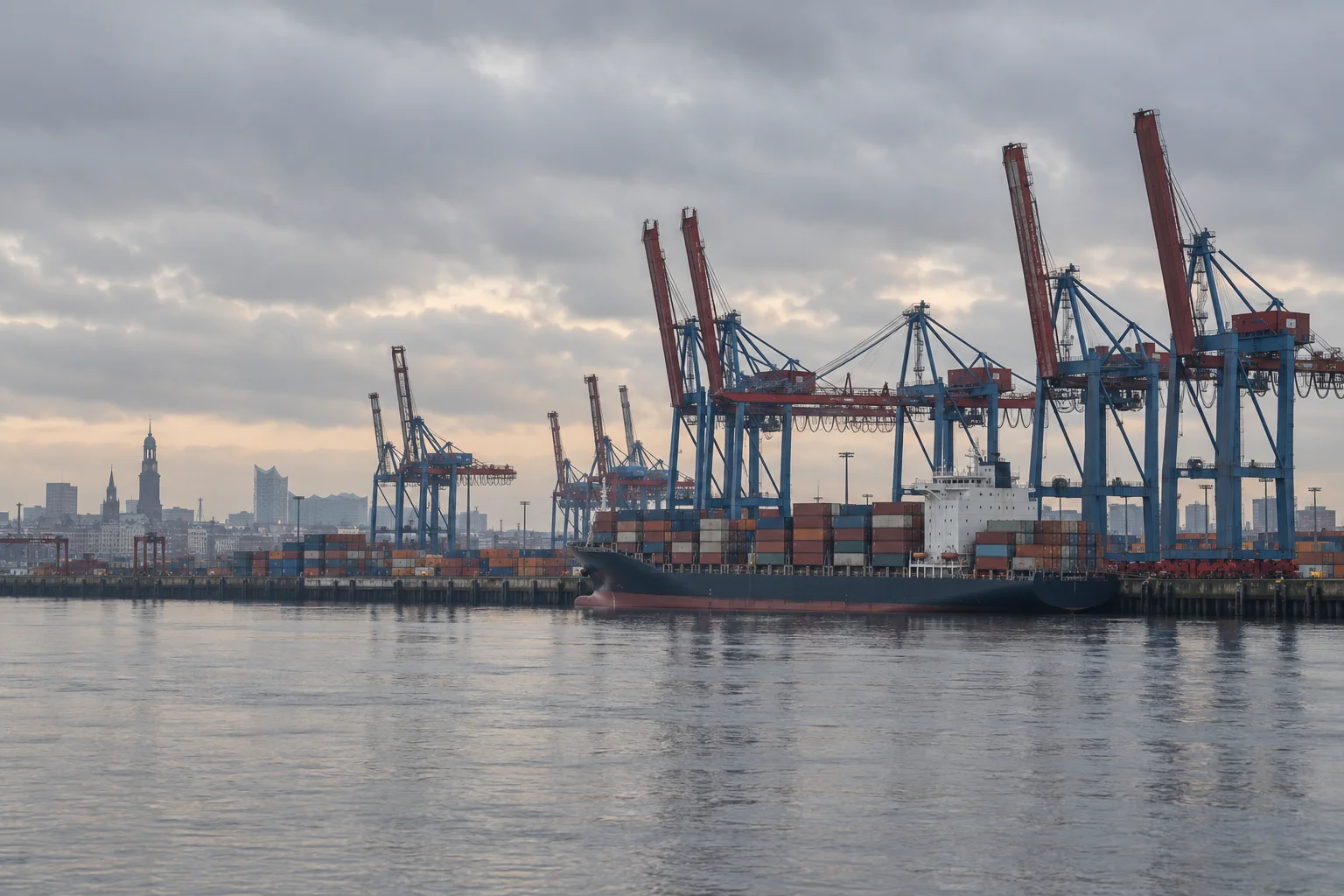
On 2 April 2025 the S&P 500 closed at 5,670.97, hours before the American president announced tariffs on almost every country. Yesterday, one year later, it closed at 6,575.32. That is 16 per cent higher in dollars. For an investor who counts in euros it is 8 per cent, because the euro rose from USD 1.0803 to USD 1.1605 over the same year. The crash that filled the news in April 2025 was over within weeks. The part that stayed was the currency, and almost nobody was talking about that at the time.
What happened in the week of 2 April 2025?
The announcement set a baseline tariff of 10 per cent on imports from nearly all countries and higher rates for individual trading partners: 20 per cent for the European Union, 24 per cent for Japan, 31 per cent for Switzerland, 34 per cent for China. The S&P 500 lost 4.8 per cent the next day and 6.0 per cent the day after. By the close of 8 April it stood at 4,982.77, down 12 per cent in four trading days.
On 9 April the country-specific rates were paused for 90 days, with the exception of China, and the index rose 9.5 per cent in one session. On 27 June 2025 it closed at a record. We wrote about that week at the time, mostly about what it did to the private share of a portfolio.
Where do tariffs stand a year later?
Not where they were announced, and not settled.
Through the summer of 2025 the United States concluded framework deals. The one with the EU was agreed on 27 July, and the joint statement of 21 August 2025 set an all-inclusive ceiling of 15 per cent on most EU goods. Country-specific rates for other partners took effect on 7 August.
Then the legal basis fell away. Most of these tariffs rested on an emergency statute, the International Emergency Economic Powers Act. On 20 February 2026 the US Supreme Court ruled by six votes to three, in Learning Resources v. Trump, that this act does not authorise the president to impose tariffs. The same day the president proclaimed a 10 per cent surcharge on most imports under a different law, section 122 of the Trade Act of 1974, in force since 24 February. That provision allows up to 15 per cent and lasts 150 days unless Congress extends it, so it runs out in late July. Tariffs on steel, aluminium, cars and some other sectors rest on a third law and continue. Whether and how importers are refunded what they paid under the emergency act is open.
The Budget Lab at Yale estimates the average effective US tariff rate at 14.3 per cent before the ruling, 7.3 per cent immediately after it and 10.5 per cent with the new surcharge, as of 9 March 2026. So a year after the announcement, the rate is far above where it was before 2025, well below the April announcement, and resting on a provision with an expiry date.
What did the year do to a euro investor's portfolio?
Take EUR 100,000 in an S&P 500 index fund on 2 April 2025, ignoring dividends and costs. On 8 April it was worth about EUR 86,700. Yesterday it was worth about EUR 107,900. In dollars the same holding went from 100 to 116. The difference is the exchange rate: the dollar lost roughly 7 per cent against the euro over the year, most of it in the first weeks. Between 2 and 11 April 2025 alone, the ECB reference rate moved from 1.0803 to 1.1346.
The DAX closed at about 22,390 on 2 April 2025 and at 23,298.89 yesterday, a gain of 4 per cent, dividends included, since the DAX is a performance index. It had ended 2025 at about 24,490 after a rise of 23 per cent in the calendar year, and gave back 7.4 per cent in the first quarter of 2026.
Two observations. Someone who sold American shares at the close of 8 April 2025 turned a paper loss of 13 per cent in euros into a real one and then had to decide when to return. And someone who did nothing still earned half of what the headline number suggests, because of a currency move that took place while attention was on the index. We looked at that effect after the first half of 2025; it applies to USD fund commitments in the same way.
For the private part of a portfolio, the shock was nearly invisible. Funds value their holdings at quarter ends. The drop came after 31 March and was gone before 30 June, three days after the index's record. A fund report for the second quarter of 2025 had little reason to show it. That is not evidence that private holdings were safer. Their valuation dates happened to miss the fall, which is the argument for looking at both sides together.
What did the year teach about reacting to a shock?
First, the fast part was faster than any considered decision. The low came four trading days after the announcement and the reversal on the fifth. An investor who needs a week to think, call an adviser and act was protected by that slowness. This is luck, and it argues for deciding in advance what would make you sell, in terms of your own liquidity needs and not of index levels.
Second, waiting for clarity was never on offer. A year later the legal basis of the tariffs has changed, the current one expires in July, and the deals negotiated last summer were built on rates whose foundation the court removed. Anyone who postponed decisions "until the tariff question is settled" is still waiting.
Third, the damage arrived through a different door than the one everyone was watching. In April 2025 the question was how far shares would fall. For a euro investor the answer that mattered was the dollar. Knowing how much of a portfolio is in dollars, across the depot, USD funds and direct holdings, was worth more than any view on tariffs.
Fourth, the next shock has a different shape. This anniversary falls into one. Since the American and Israeli air strikes on Iran began on 28 February 2026 and Iran closed the Strait of Hormuz in early March, Brent crude rose above USD 110 a barrel in late March, and the S&P 500 lost 4.6 per cent in the first quarter. Yesterday's rise of 2.7 per cent in the DAX came on hopes that the war might end soon. Nothing from April 2025 tells us how this one resolves. What carries over is the preparation: cash set aside for capital calls so that nothing has to be sold at a low, ranges for each part of the portfolio and not point targets, and a current figure for currency exposure.
None of this is investment advice, and a different year could have ended differently: a fall of 12 per cent that continues is a normal event in market history too. The use of an anniversary is to compare what you did in that week with what you would have wanted to do. If the two differ, write down the rule now, while the next shock is still running.
More articles
Third quarter 2026: what moved for a euro investor
Shares ended the quarter about where they began. Yields did not: the ten-year Bund rose from 2.93 to 3.64 per cent, and the ECB and the Fed both raised rates.Ask your portfolio: Valued's read-only connector for ChatGPT
From today ChatGPT can read the workspace you choose in Valued and cite the page behind each answer. It cannot change, upload, delete or send anything.German tax certificate per depot: what the lines mean
Each German bank withholds tax as if it were your only bank. With several depots that costs money until Anlage KAP and a loss certificate put it right.